
The Daily Cleaning Schedule for Busy Families That Runs on Autopilot
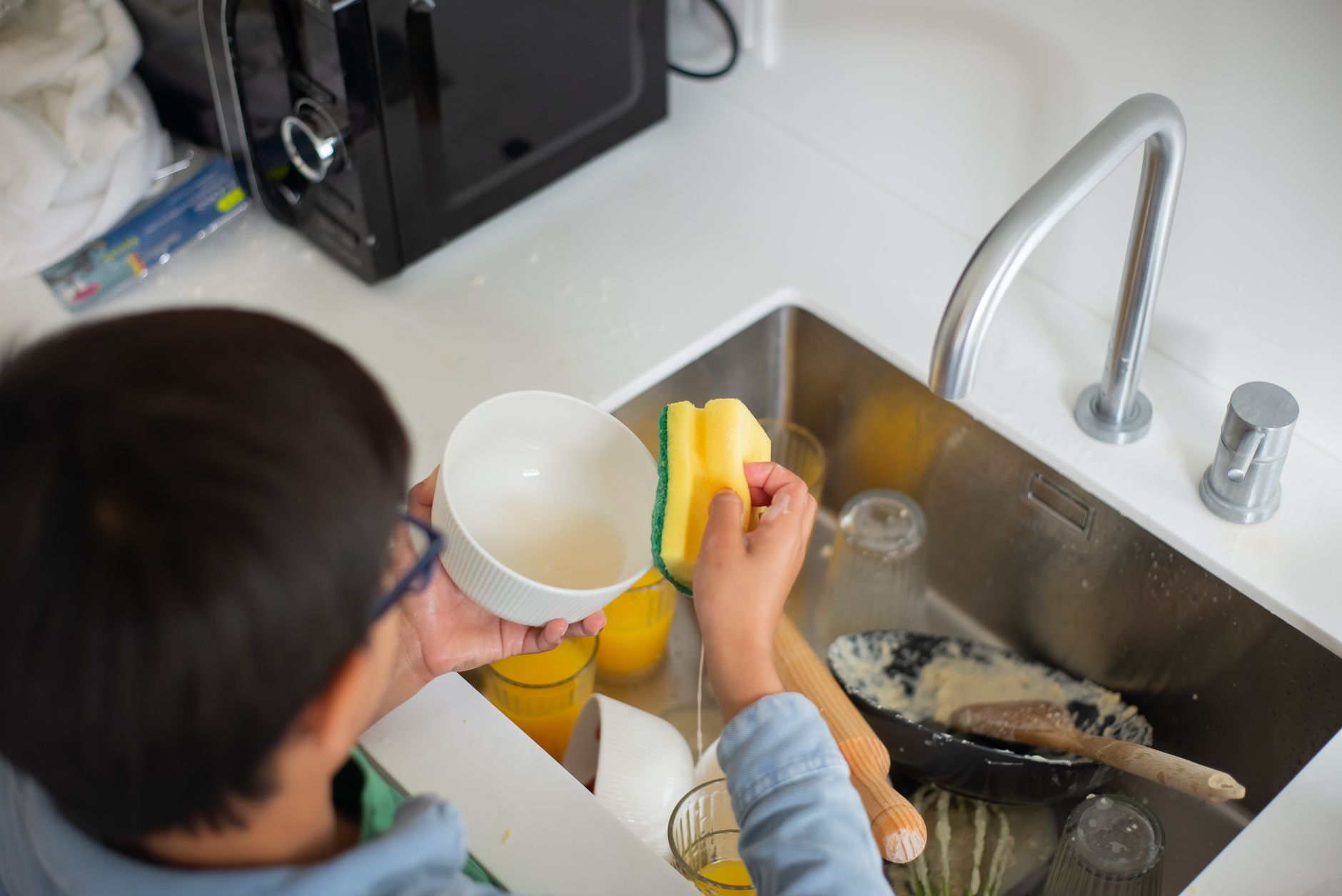
If you’ve opened TikTok or Instagram lately, you’ve probably noticed the 2026 cleaning trend that’s dominating feeds: “silent cleaning” — parents filming their entire morning reset in under 10 minutes, no voiceover, just the satisfying rhythm of a home coming back to order before anyone’s fully awake. What’s driving this isn’t aesthetic perfection. It’s survival. With hybrid work schedules sticking around, school extracurriculars back at full throttle, and the “sandwich generation” of parents caring for both kids and aging parents simultaneously, the old “clean on Saturday” model has collapsed completely.
What busy families actually need in 2026 isn’t more cleaning motivation — it’s a daily cleaning schedule for busy families that operates on autopilot, requires zero decision-making, and distributes the load so one person isn’t drowning in dishes while everyone else scrolls.
Here’s the system that actually works.
Why “One Big Clean” Destroys Family Morale
The weekend deep-clean marathon feels productive in theory. In reality? It creates a predictable cycle of resentment, especially for the parent who initiates it. Research from the University of Michigan’s Institute for Social Research consistently shows that uneven household labor remains one of the top predictors of relationship dissatisfaction — and that was before the pandemic blurred every boundary.
The daily approach inverts this entirely. Instead of losing 3-4 hours every Saturday, you’re trading 8-12 minutes scattered across the day. The math is brutal and beautiful: 10 minutes × 7 days = 70 minutes weekly, versus the 180+ minutes most families spend in a single weekend session. More importantly, the mental load evaporates because nothing accumulates into an overwhelming pile.
The families sticking with this system in 2026 share one trait: they stopped treating cleaning as a moral obligation and started treating it as infrastructure maintenance — like charging your phone or buying groceries.
The 4 Anchor Points That Make Autopilot Possible
A sustainable daily cleaning schedule for busy families runs on four fixed touchpoints, not vague “whenever you can” suggestions. These anchors exploit existing transition moments in your day, eliminating the need for willpower.
Morning Launch (6-8 minutes, before work/school):
- Unload dishwasher while coffee brews (2 min)
- Wipe counters and spot-sweep kitchen (3 min)
- Everyone makes their bed immediately (2 min — yes, kids too, even toddlers with simplified covers)
- One “surface sweep” of the living room: remote to caddy, blanket folded, cups to sink (1 min)
The Arrival Reset (4 minutes, first 10 minutes home):
- Shoes to bin, bags to hooks, mail sorted immediately (2 min)
- Wipe bathroom sink after anyone uses it post-work/school (1 min)
- One laundry decision: hamper, hanger, or machine (1 min)
Evening Pre-Load (8 minutes, after dinner):
- Dishwasher loaded and started, sink wiped (3 min)
- Tomorrow’s lunches packed during cleanup, not morning chaos (3 min)
- 5-minute family “tidy sweep” — everyone returns two items to their proper zone (2 min)
The 2-Minute Night Lock (literally 2 minutes):
- Wipe bathroom counter, set out fresh hand towel, check tomorrow’s calendar
Total daily investment: 22 minutes, distributed across four people who are already in motion.
The “Zone Defense” System for Kids Who Actually Participate
Here’s where most family cleaning schedules collapse: the delegation. Telling a 7-year-old to “clean their room” is cognitively overwhelming. The 2026 approach — borrowed from occupational therapy principles and refined by parent coaches on social media — uses zone defense with visual boundaries.
Assign each family member (including adults) one permanent zone that rotates weekly, not daily. The rotation prevents boredom; the permanence within each week builds automaticity.
Example week structure:
- Kitchen Zone: Wipes counters after every meal, loads/unloads dishwasher, handles trash
- Common Zone: Living room reset, remote organization, blanket folding, shoe wrangling
- Bathroom Zone: Counter wipe, toilet check, towel refresh, supply alert (when toilet paper runs low)
- Entry Zone: Mail sort, bag hang, shoe bin, coat rack
Kids as young as 4 can handle a simplified zone with picture checklists. The critical element: zones are checked at the same time daily (usually the evening pre-load), creating social accountability without nagging. When everyone cleans simultaneously for 5 minutes, it feels communal rather than punitive.
Families using this system report that by week three, kids begin self-correcting without prompting — the behavior becomes as automatic as buckling a seatbelt.
Habit Stacking: The Neuroscience Shortcut
The most successful daily cleaning schedule for busy families in 2026 isn’t about discipline. It’s about habit stacking — attaching new behaviors to existing neural pathways.
James Clear’s framework, now widely adopted beyond its productivity origins, works exceptionally well for household management because homes are already full of reliable triggers:
- After you pour morning coffee → unload dishwasher
- After you use the bathroom in the morning → spray counter and wipe (keep spray under sink)
- After you set down your keys arriving home → hang them, sort mail, start arrival reset
- After you finish any meal → stand up and immediately clear your own dishes to dishwasher (non-negotiable household rule)
The key insight: never schedule cleaning as a standalone task. It will always lose to literally anything else. Attach it to biological needs (eating, using bathroom) or environmental transitions (arriving home, going to bed) and it becomes nearly automatic within 21 days.
Building in “Grace Gaps” for Real Life
Even the most optimized system crashes during illness, travel, work deadlines, or simply a brutal Wednesday. The families maintaining long-term consistency build in intentional grace gaps — not excuses, but planned recovery mechanisms.
The Sunday 20-Minute Reset: Not a deep clean. A dedicated session where the family collectively addresses anything that escaped the daily system during the week. One load of laundry that got abandoned, the bathroom mirror that needs attention, the fridge shelf with the mysterious spill.
The “Good Enough” Standard: Define explicitly what “done” means for each zone. A wiped counter with visible streaks is acceptable. A bed with the blanket pulled up crookedly counts as made. Perfectionism destroys consistency faster than laziness ever could.
The Emergency Protocol: For genuine chaos weeks (new job, sick kids, moving), drop to absolute minimum survival mode: dishes done daily, one bathroom wipe, beds made. Everything else waits. The system resumes automatically when capacity returns because the anchors are neurologically embedded.
Your Next Step: Start With Just One Anchor
The biggest mistake families make: implementing the entire system on Monday and abandoning it by Wednesday. The 2026 data on habit formation is clear — single-habit adoption has 80% higher success rates than multi-habit launches.
Choose your most painful current friction point. Is it morning chaos? Start with the morning launch only. Is it weekend dish mountains? Begin with the evening pre-load. Practice that single anchor until it feels automatic, usually 2-3 weeks, then add the next.
The daily cleaning schedule for busy families that survives isn’t the most comprehensive one. It’s the one you’ll actually do when you’re exhausted, your kid is crying, and you have a meeting in 8 minutes. Build it small, attach it tight, and let the compound effect handle the rest.
Your future self — the one enjoying Saturday mornings with coffee and a book instead of a toilet brush — will thank you.